The operation needs more capacity
When delay and cost move from one function to another, the real constraint may sit in handoffs, sequencing, decision rules, or the way work flows end to end.
Bold Group helps leadership teams uncover the constraint and redesign the system behind it — the handoffs, the sequence, who decides what, and what gets measured — then create a practical path to measurable business impact.
Depending on the problem, a Transformation Blueprint may set out what needs to change, who owns each part, how value would be measured, and options and sequencing for implementation.

A business may not lack effort.
When the constraint sits across processes, decisions, roles, resources, and incentives, another tool, workshop, or isolated improvement will not be enough.
What result must the business create—and what in the current system is preventing it?
What looks like a shortage of people, technology, ideas, or budget may be a system producing exactly the result it was designed to produce.
When delay and cost move from one function to another, the real constraint may sit in handoffs, sequencing, decision rules, or the way work flows end to end.
If work, ownership, controls, and measurement stay unchanged, technology can automate parts of the old system without changing the business result.
More projects do not solve unclear priorities. The constraint may be shared portfolio criteria, decision rights, resource choices, or how often leadership actually reviews and decides.
Every engagement starts from a result that matters commercially and a constraint that keeps it out of reach. This is the constraint leadership asked us to remove, and what each case can and cannot show about the redesign.
CASE 01Retail expansion / Transformation BlueprintRethinking the convenience-store opening sequence
CASE 02Maintenance services / Capacity without capexRethinking the turbine-overhaul sequence
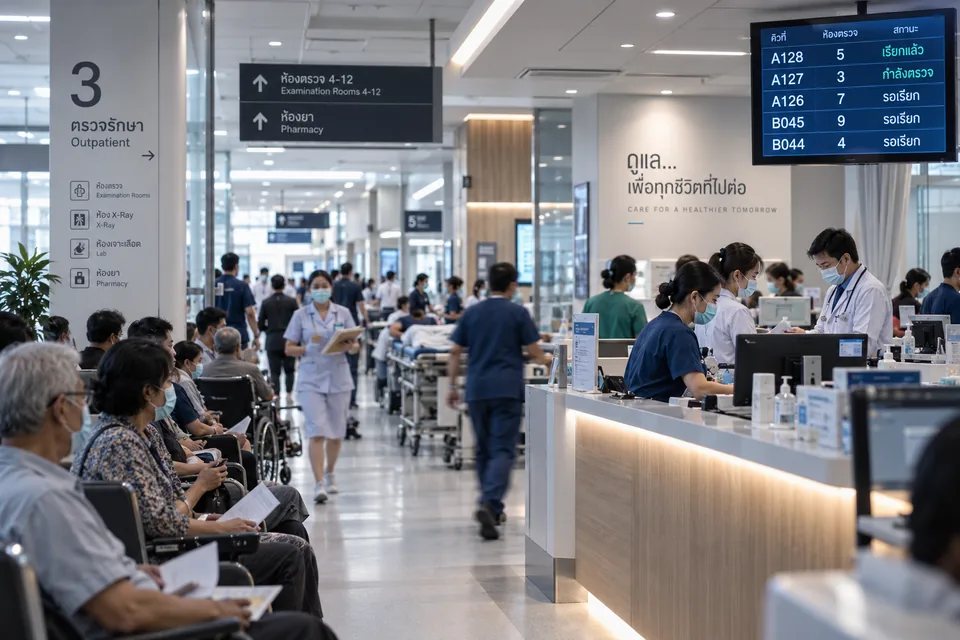
CASE 03Public healthcare / Service designDesigning an Alzheimer outpatient handoverAlso on the cases page

Clarify the business outcome, baseline, scope, decision owner, and success logic.
Examine the assumptions and operating conditions the organization has treated as fixed.
Align process, roles, decisions, capabilities, governance, incentives, and technology around the required result.
Test critical assumptions, feasibility, and risk, and quantify how the change is expected to improve performance, before full-scale commitment.
Create the blueprint, ownership model, measurement system, and implementation path people can act on.
Credible impact begins by saying exactly what is known.
Each case states which part was the designed proposal, which was the client team’s projection, and whether the client has put the approach into use — with our role and the limits of the conclusions drawn alongside. That an approach is in use does not mean it has been measured, and a projection is not a result.
What each case can show Start from what is knownWe bring experience across different industries and transformation problems. This allows us to connect practices and possibilities that may remain invisible within a single organization or sector.
We do not begin with a predetermined technology, workshop, standard, or answer. We begin with the result the business needs and design around the resources the organization can realistically access.
We start from the material business problem and the target outcome, not from a tool, a technology, a workshop, or a standard.
Baseline, outcome logic, and the critical assumptions are established before intervention, so value can be judged rather than asserted.
The engagement is designed to leave the organization able to continue without us, not dependent on us.
Bold Group is a business-transformation and innovation-management partner. We help leaders uncover the constraints preventing an important result, redesign the system behind them, and create a path the organization can mobilize.
Responsibility depends on the engagement. In a Transformation Blueprint engagement, the client or its selected vendors normally own implementation, while we can provide support or act as the client's business and technical representative when contracted. In an Innovation Management System engagement, we lead system establishment, run the early management cycles with the client, and transfer operating responsibility to the internal team.
No. We can establish and operationalize an innovation management system aligned with ISO 56001. Independent certification bodies perform audits and issue certifications.
No. We start with the business result and redesign the work, roles, decisions, controls, and measurement around it. Appropriate technical providers build and configure the technology.
Workshops, training, and coaching may be components of an engagement. They are used when they help the organization make decisions, redesign its system, build capability, or operate the change, not as substitutes for a business result.
Tell us what must change, what is preventing it, and who owns the decision. We will help determine whether the problem is right for Bold Group.